

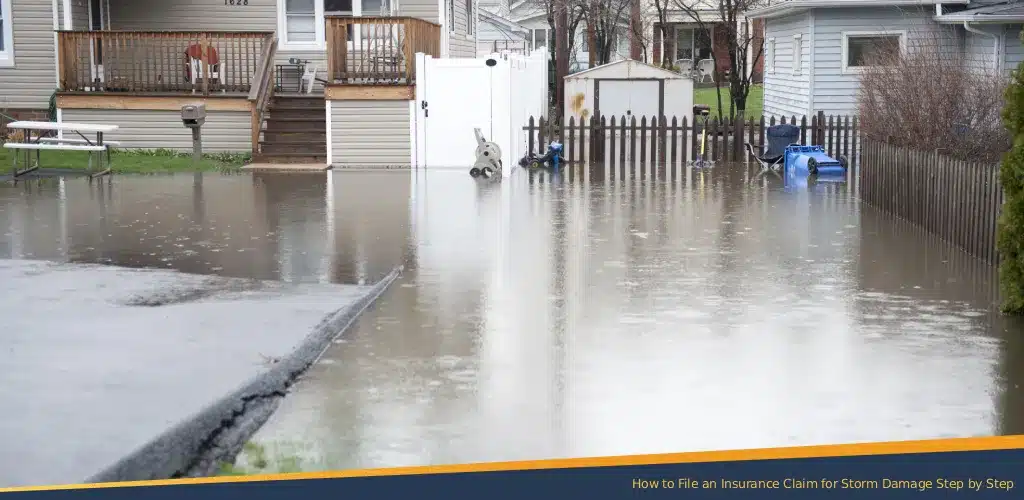
Between fallen trees, shattered windows, roof leaks, and water damage, the aftermath of a violent storm can feel overwhelming. And while you expect your insurance company to step up, delays, denials, and lowball offers are far too common. That’s why knowing how to file an insurance claim for storm damage the right way is crucial. One wrong move could cost you thousands.
In this guide, we walk you through the exact steps you should take after a storm to protect your property, your rights, and your financial future.
Step-by-Step Guide to Filing a Storm Damage Claim
According to Weiss Ratings, 14 of the largest insurance companies in the country closed between 40% and 51% of homeowner claims with no payment in 2024, leaving nearly half of policyholders out in the cold. That’s why every step you take after storm damage matters.
One missing photo, one delayed notice, or one vague repair estimate can give your insurer the excuse they need to delay, deny, or underpay.
The following are steps you can take to make sure that your claim starts with the strongest possible footing:
Step 1: Ensure Safety and Prevent Further Damage
Your first priority is safety. Make sure your family is safe and that the storm has fully passed before inspecting the damage. If it’s safe to do so:
- Tarp your roof to prevent water intrusion
- Board up broken windows
- Move undamaged belongings to a dry location
Most policies require policyholders to mitigate further damage, meaning you must take reasonable steps to stop things from getting worse. This doesn’t mean you have to start repairs—just that you should prevent additional loss where you can. Always keep receipts for any temporary fixes.
Step 2: Document the Storm Damage Immediately
Don’t wait for the insurance adjuster to tell you what’s damaged. Grab your phone or camera and document everything:
- Take wide-angle and close-up photos
- Record video walkthroughs
- Capture timestamps if possible
- Include before-and-after comparisons (if you have them)
- Create a written inventory of all damaged items with estimated value
The more detailed your documentation, the harder it will be for your insurer to dispute your claim. For major losses, consider using a professional damage assessment service.
Step 3: Review Your Insurance Policy
Before you file, read your insurance policy to understand what’s covered and what’s excluded. Most homeowners and commercial policies cover:
- Wind and hail damage
- Lightning strikes
- Tornadoes
- Some types of water damage (not flooding)
However, many policies exclude flooding and earth movement unless added via a rider or separate policy.
Tip: Your declarations page provides a snapshot of coverages, deductibles, and limits. If you’re unsure what your policy includes, Daly & Black can help review it.
Step 4: File Your Claim Promptly
Don’t delay. Most insurance policies require that you report storm damage “promptly” or “within a reasonable time.”
- Contact your insurer by phone or online
- Provide your policy number and a description of the damage
- Note the claim number and name of your assigned adjuster
- Keep a written log of every call, email, or conversation
When you file, use your documentation to support your account. Filing quickly ensures your claim isn’t denied for “late notice.”
Step 5: Cooperate with the Adjuster, But Be Cautious
Once your claim is filed, an adjuster will likely schedule a site inspection. Be present for this visit. While adjusters may appear helpful, they ultimately work for the insurance company—not you.
- Walk through the damage with them
- Explain what happened clearly and truthfully
- Take notes on what they examine (and what they ignore)
Stick to the facts, don’t speculate, and never admit fault. If you’re unsure how to navigate this interaction, Daly & Black can help protect your interests from day one. If you receive an estimate that seems low, Daly & Black can review it at no cost to see if you’re being shortchanged.
Step 6: Get Independent Repair Estimates
Don’t rely solely on your insurer’s contractor. Obtain your own independent repair quote to compare against the adjuster’s report. These quotes should:
- Be itemized and written
- Include photos
- Match the scope of actual damage
Having independent documentation strengthens your negotiating position if your insurer undervalues your losses.
Step 7: Monitor the Claim Process and Watch for Red Flags
After you’ve filed, stay engaged. Your insurance company may:
- Delay progress by requesting repetitive documents
- Lowball your offer to save money
- Deny your claim citing ambiguous policy terms
If any of this happens, it may be time to contact a storm damage lawyer. Insurers count on your frustration; don’t give them the advantage.
When to Involve a Storm Damage Lawyer
You don’t need to wait until your claim is denied to seek legal help. In fact, the earlier you involve a storm damage lawyer, the more protection you’ll have from common insurance tactics. Here’s when to call:
When Your Claim Is Delayed
If weeks have passed and you’re still waiting on responses, inspection dates, or payment timelines, your insurer may be using delay as a pressure tactic. This is more common than you think, and it’s designed to wear you down. But under Texas Insurance Code § 542.056 and Louisiana Revised Statute § 22:1892, insurers are legally required to acknowledge, investigate, and make timely payment decisions on claims. If they fail to meet these deadlines, they may owe not only the original claim amount but also penalties and attorney fees.
When Your Claim Is Undervalued
A lowball settlement can leave you thousands of dollars short on critical repairs. If the insurance adjuster downplays structural damage or quotes rates that seem far below market, it’s time to bring in backup. Daly & Black works with trusted estimators and experts to fight for the true value of your losses.
When Your Claim Is Denied
Denials often rely on vague policy language or false assumptions about pre-existing damage. If your claim has been flat-out denied or you’re being accused of wrongdoing, don’t panic. We’ve seen it all before and know how to fight back.
If You’re Filing a Business Interruption Claim
Business interruption losses are notoriously complex. Insurers often dispute income projections, overhead costs, and policy triggers. Whether you’ve lost days, weeks, or months of revenue, it’s smart to seek legal guidance before you file. Daly & Black understands how to build a compelling claim with financial experts and forensic accountants.
We represent policyholders across Texas, Louisiana, and the country at large, and we know what it takes to protect your rights.
How a Lawyer Can Help With Your Storm Damage Claim
Even the most carefully filed storm damage claims can be undervalued, delayed, or outright denied. That’s where Daly & Black come in. We know how to handle insurance companies that try to avoid responsibility, and we know how to get results. Whether you’re stuck in the fine print or up against a bad-faith insurer, our team brings the strategy, experience, and grit it takes to fight back.
We Review Your Policy with a Finetooth Comb
Many homeowners don’t realize that insurance policies contain dense legal language and hidden exclusions. We comb through your declarations, endorsements, and exclusions to uncover exactly what you’re entitled to. This ensures no benefit is left on the table and no tactic goes unchallenged.
We Challenge Lowball Estimates with Real Experts
If your insurer comes back with a number that won’t even cover basic repairs, we’ll bring in independent contractors, structural engineers, and valuation specialists to properly document the full scope of your loss. With these expert reports in hand, we aggressively negotiate to increase your payout or take the matter to court if necessary.
We Handle Every Communication So You Don’t Have To
Dealing with adjusters, claim managers, and insurance attorneys can be a full-time job. We step in as your voice—handling all written and verbal communications, preserving records, and making sure nothing is said or done that could hurt your case.
We Prepare Your Case for Litigation From Day One
Even if your claim never goes to court, we build every case like it will. That means preserving evidence, documenting damages, and building a compelling legal strategy designed to hold the insurance company accountable. If a lawsuit becomes necessary, we’re ready.
We Work on Contingency: You Don’t Pay Unless We Win
You’re already dealing with property damage and insurance stress. You don’t need legal bills on top of that. Our contingency fee model means you don’t owe us a dime unless we recover compensation for you.
Insurance companies have teams of lawyers. You deserve one of your own.
FAQ
What is the first step in filing a storm damage insurance claim?
Ensure everyone is safe, prevent further damage, and begin documenting the damage. Once you’ve gathered enough evidence, notify your insurer to initiate the claim.
How should I document storm damage for my claim?
Take timestamped photos and videos of all affected areas. Include written notes about what was damaged, approximate values, and any receipts or repair estimates.
What happens after I file a storm damage claim?
An adjuster will visit your property to assess damage and prepare a report. The insurer will then review the report and issue a settlement, often lower than what’s fair. Be ready to contest it.
Get Legal Backup. Schedule Your Free Consultation Today
Don’t let your insurer delay, deny, or shortchange your claim. Daly & Black is ALL IN. ALL THE TIME for homeowners and businesses hit by storms.
Call now or request your free consultation. Let us help you pursue the compensation your policy promised.